
Grow your edges back — before it's permanent
Thinning edges and a receding hairline from tight styles don't have to be forever. Caught early, traction alopecia is reversible — and we build a drug-free plan to bring your hair back.
Book Your EvaluationWhat is traction alopecia?
Traction alopecia is hair loss caused by chronic pulling or tension on the hair follicles — most often from tight braids, ponytails, weaves, extensions, locs, or wigs worn too tight. It usually shows up first along the hairline, edges, and temples: the areas under the most pull.
Here's the important part: in its early stages, traction alopecia is non-scarring and reversible. But if the tension continues over time, the follicles can be permanently damaged and replaced with scar tissue — at which point the hair can't grow back. That's why acting early matters so much.
Reversible
The window matters. In its early, non-scarring stage, traction alopecia can be fully reversed once the tension is removed and the scalp is properly cared for. Left too long, it becomes permanent scarring. If you're seeing thinning edges, the best time to act is now — not later.
Early signs to watch for
The earlier traction alopecia is caught, the more can be done. Look for these along your hairline and edges.
Thinning edges & hairline
A receding or thinning fringe around the temples, forehead, or nape — often where styles pull hardest.
Small bumps or tenderness
Little bumps around follicles, redness, or soreness after styling can be early inflammation.
Broken or short hairs
Short, broken hairs or a "fringe" of remaining fine hairs along the edge of the loss.
Headaches after styling
If a style is tight enough to hurt, it's tight enough to damage follicles over time.
Widening part or gaps
Patches of reduced density where tension is repeated in the same spots.
Slower regrowth
Areas that used to fill back in but now stay sparse — a sign the follicles need help.
How we help you regrow
Assess
We examine your scalp and edges closely with microcamera analysis to see follicle health and stage the loss — so we know exactly what we're working with.
Relieve & treat
We remove the source of tension and use drug-free, plant-based scalp therapy to calm inflammation and create the right conditions for regrowth.
Rebuild & protect
We support new growth and coach you on styling that protects your edges long term — so the results last.
Documented traction alopecia regrowth
Real clients, real timelines. Every scalp is different — this is what's possible with an early, personalized plan.
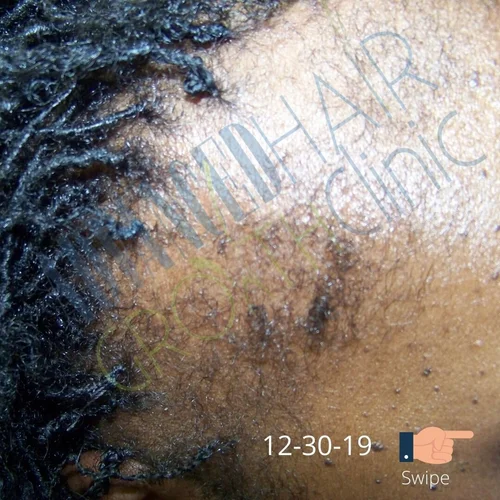
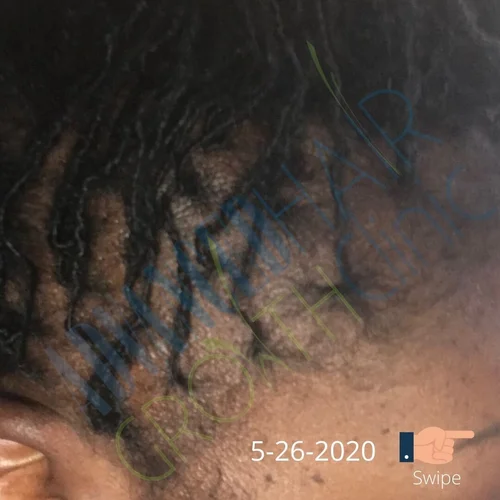
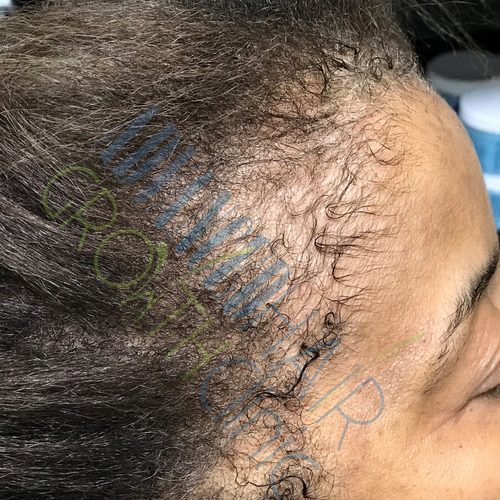
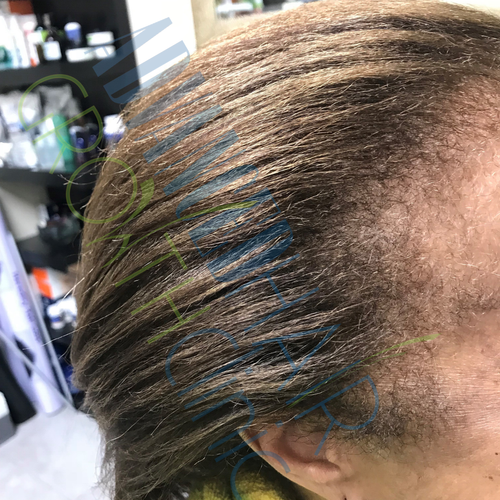
Individual results vary. Outcomes depend on the stage of traction alopecia and consistency with the plan.
Traction alopecia, answered
Can traction alopecia grow back?
Yes — in its early stages, traction alopecia is reversible. Once the tension is removed and the scalp is properly cared for, hair can regrow. The key is acting before the follicles are permanently scarred, which is why an early evaluation is so important.
Is it too late for me?
Often it's not — but the only way to know is to look. If the follicles are still viable, there's real potential for regrowth. If some areas have scarred, we're honest with you about that and focus on protecting and maximizing the rest. Come in for an evaluation and we'll tell you exactly where you stand.
What causes traction alopecia?
Repeated tension on the hair — tight braids, ponytails, weaves, extensions, locs, or wigs, especially when worn continuously. Chemically relaxed hair is more vulnerable because the tension compounds weakened hair. It's most common along the hairline and edges.
Do you use minoxidil or steroids?
No. Our approach is completely drug-free and plant-based. We remove the source of tension, calm the scalp, and support regrowth naturally — no minoxidil, steroids, or harsh chemicals.
How long does regrowth take?
It varies by person and stage, but many clients see meaningful change within a few months of consistent care. We'll give you honest expectations for your situation at your evaluation.
Where are you located?
We're at 10931 E. Independence Blvd, Ste T, Matthews, NC 28105, serving Charlotte and the surrounding area. Call (980) 938-6100 or book online.
Let's grow your edges back
Traction alopecia responds best to early care. Book your evaluation and let's find out what's possible for your hairline — while the follicles are still with you.
Book Your Evaluation