
Understand your alopecia. Then do something about it.
Alopecia isn't one condition — it's many, and each has a different cause and a different path forward. We find the real reason behind your hair loss and build a drug-free plan to address it.
Book Your EvaluationA specialist's approach to alopecia
Our main focus is finding the root cause of your hair and scalp problems. If your doctor hasn't solved your issues — or you prefer natural therapies over medications — we can help. We specialize in alopecia, from chronic thinning to genetic hair loss, and also address itchy, flaky, or sensitive scalps.
Because alopecia is complex, a proper trichology evaluation takes time — we review your hair-care routine, medical history, lifestyle, and nutrition before examining your hair and scalp closely, all in a private setting.
Caught early, some of the most common hair loss is reversible. Traction alopecia — hair loss from tight, repeated tension on the follicles — is non-scarring and reversible in its early stages, but can become permanent scarring if the tension continues. That's why early evaluation matters so much.
The conditions we address
Alopecia takes many forms. Here are the ones we most commonly evaluate and treat — understanding which one you have is the first step to the right plan.
Androgenetic Alopecia
Male or female pattern baldness — the most prevalent form of hair loss, caused by a combination of genetics and hormones. Often gradual, and most responsive when addressed early.
Traction Alopecia
Hair loss from persistent pulling or tension — often from tight braids, ponytails, weaves, or extensions. It typically shows first along the hairline and edges.
Reversible if caught early Traction alopecia treatment in Charlotte →Alopecia Areata
An autoimmune disorder where the immune system mistakenly attacks hair follicles, causing round, smooth patches of hair loss on the scalp or body.
Telogen Effluvium
A temporary, diffuse shedding that happens when many follicles prematurely enter the resting phase — usually triggered by stress, illness, childbirth, or hormonal changes.
Often temporaryScarring (Cicatricial) Alopecia
A group of disorders that destroy follicles and replace them with scar tissue. Because the follicle can't regrow, early identification is critical to preserve what remains.
Time-sensitiveAlopecia Totalis & Universalis
Advanced forms of alopecia areata — totalis is complete loss of scalp hair; universalis is loss of hair across the entire body, including brows and lashes.
Anagen Effluvium
Hair loss during the active growth phase, most commonly caused by chemotherapy or radiation. We provide supportive, gentle scalp care through and after treatment.
Ophiasis
A specific pattern of alopecia areata where hair loss occurs in a wave-like band around the sides and back of the scalp.
Documented regrowth, real clients
A few real before-and-afters across different types of alopecia. Every scalp is different — these show what's possible with a personalized plan.
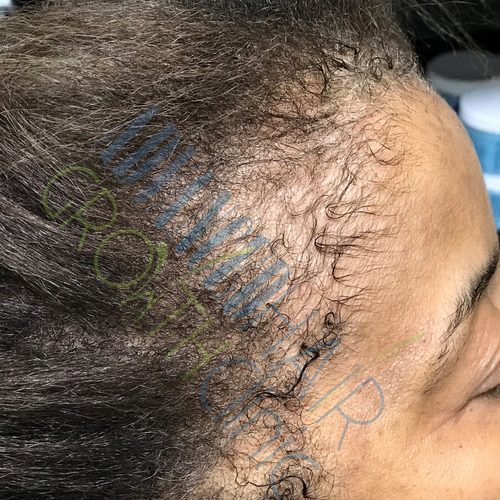
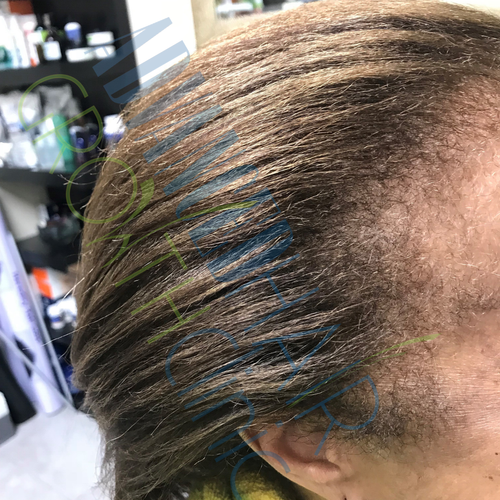
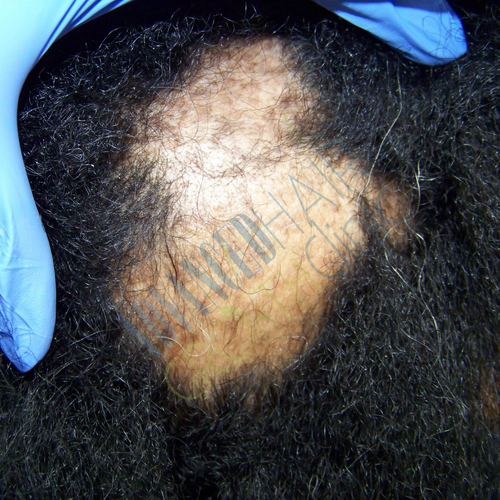
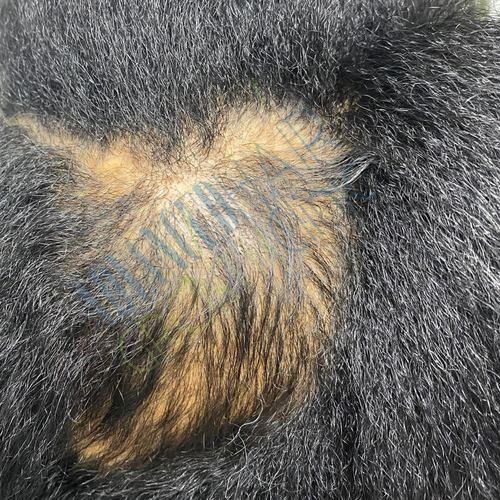
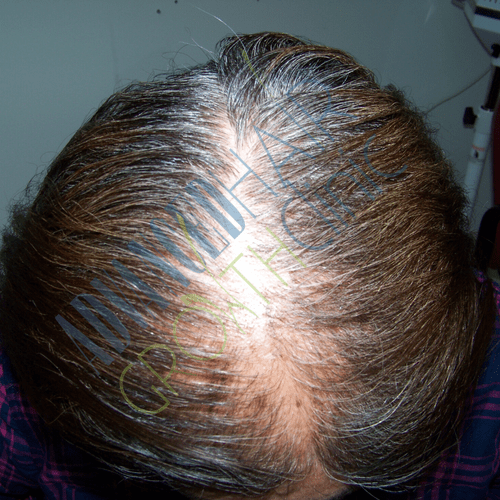
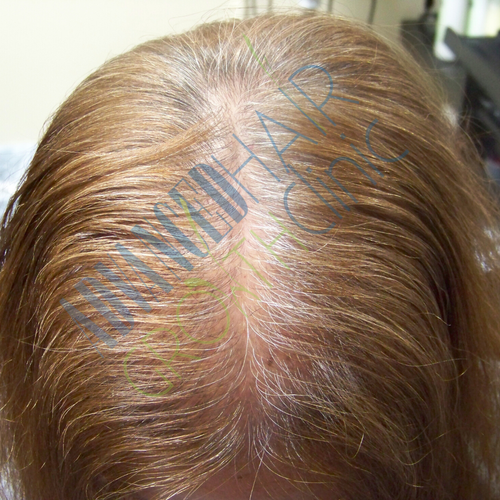
Individual results vary. Outcomes depend on the type of alopecia, its stage, and consistency with the plan.
What clients say
"Received treatment for hair loss. Amazing experience and results working with Advanced Hair Growth. I am very pleased with the results and would recommend Kimra without reservation."
"Kimra is a professional and cares about the health of her clients' hair. She is very knowledgeable and always looking for better, healthier ways to help hair grow. I know I can trust her with my hair."
"Thank you so much! You are truly a blessing and you have no idea how much you have helped me. I got my hairline back!"
Alopecia, answered
Can alopecia be reversed?
It depends on the type. Traction alopecia and telogen effluvium are often reversible, especially when caught early — traction alopecia is non-scarring in its early stages, and hair can regrow once the tension is removed. Scarring (cicatricial) alopecia, on the other hand, causes permanent loss, which is why early evaluation is so important. The first step is identifying exactly which type you have.
What is traction alopecia and is it permanent?
Traction alopecia is hair loss caused by repeated pulling or tension on the follicles — usually from tight braids, ponytails, weaves, or extensions. It typically appears first along the hairline and edges. In its early stages it's reversible, but if the tension continues over time it can progress to permanent scarring. Early intervention is key.
Do you use minoxidil, steroids, or other medications?
No. Our approach is drug-free and plant-based. We focus on identifying and addressing the root cause of your hair loss, and creating the right conditions on your scalp for healthy hair to grow — without minoxidil, steroids, or harsh chemicals.
How do I know which type of alopecia I have?
That's exactly what a trichology evaluation is for. Using close scalp analysis, along with a review of your history, lifestyle, and nutrition, we identify the specific type and cause of your hair loss — so your plan targets the real problem instead of guessing.
Where are you located?
We're at 10931 E. Independence Blvd, Ste T, Matthews, NC 28105, serving Charlotte and the surrounding area. Call (980) 938-6100 or book online.
The sooner you know, the more we can do
With many types of alopecia, early evaluation makes the biggest difference. Book yours and let's find out what's really happening — and what's possible.
Book Your Evaluation